

Few techniques in saltwater fly fishing are as visually intense as watching a big striper commit to a surface plug, only to turn and crush a fly the moment the teaser disappears. The chaos, the adrenaline, the precision required — it's what keeps fly anglers coming back for more.
In particular, the bait and switch technique demands patience, boat awareness, and the ability to execute under pressure. When it all comes together, it produces some of the most exciting fly fishing for striped bass Cape Cod has to offer.
I recently sat down with Captain Diogo of Gorilla Tactics Charters, one of Cape Cod's most experienced fly fishing charter captains, to break down the bait and switch from start to finish — the gear, the strategy, the mistakes, and everything in between.

Captain Diogo of Gorilla Tactics Sportfishing with a bruiser of a striped bass caught on the fly rod. Over the years Diogo has developed a killer technique for catching big stripers on the fly.
What is the Bait-and-Switch?
What is bait-and-switch, and why is it so effective for striped bass on the fly?
Diogo has made the bait-and-switch a centerpiece of his Cape Cod fly fishing charters — specifically for anglers chasing larger striped bass on the fly. The concept is simple: run a hookless plug to draw stripers to the boat, pull it at the right moment, and present a fly to fish that are already fired up and committed.
"I didn't come up with the bait and switch. A lot of captains around here use it. Jamie Boyle down on the Vineyard is the one that really made it famous." — Diogo
What makes it so effective is the ability to be selective. "I've had guys that are good enough that they will pull the fly away from a smaller fish and actually wait for a larger fish," he says. "That's why I use it."

A striped bass commits to a surface plug during a bait-and-switch sequence. The moment the plug is ripped away, the fly goes in — and the fish rarely hesitates.
The perfect bait-and-switch sequence
Walk us through a perfect bait-and-switch sequence — from spotting fish to the fly hitting the water.
According to Diogo, a successful bait-and-switch sequence comes down to two things: knowing your angler's casting range and managing the drift. These are the factors that determine whether the whole thing comes together or falls apart, regardless of how good the fishing is.
"Everyone's like, 'oh I can cast, I'm good.'" he laughs. "Well, let me see it."
Diogo watches every angler cast before the teasing begins — because 10 or 12 feet of range makes a real difference when fish are spooky and the window is short. If someone can only reach 20 feet, he has to tease the fish all the way to the boat, and at that distance they're far more likely to spook than eat.
Once striped bass are located and the plug is in the water, the drift takes over. The boat is often moving toward the fish, so the angler needs to get the fly in the water and start stripping immediately to keep up with the slack. On a fast drift, Diogo will put an engine in reverse to buy more time.
Timing the pull is where it all comes together. With slow followers, he waits until the fish is well within range. With a rushing school, the approach changes entirely.
"Once they're in range, I typically rip the plug out of the water. That way, once that fly hits the water, it's usually a pretty instant bite."
The Ideal Setup
What does your ideal bait-and-switch setup look like — rod, line, and teaser?
According to Diogo, a 10-weight is the standard recommendation, and where most anglers should start. A 9-weight can get the job done in calm conditions with a capable caster, but Cape Cod is rarely calm — and when you're throwing big, wind-resistant patterns all day, that extra backbone makes a real difference. An 11-weight is never a bad call when the flies are bulky and the wind is up.
Line choice matters too. A full intermediate or a floating line with an intermediate tip are both common setups for this style of fly fishing, and a shorter, stiffer leader in the 9-foot range keeps turnover clean when you're throwing large patterns under pressure.
For the teaser, Diogo runs a Jigging World Night Ranger paired with a Van Staal 50, spooled with 30-pound braid and a 30-pound fluorocarbon leader, throwing a hookless Daiwa Darter or Super Dog Walker.

Large surface lures like the one shown above are ideal for the bait and switch technique. Remove the hooks, work the lure across the surface teasing the stripers to within casting range, then rip the plug out of the water and have your fly angler deliver the fly.
One thing anglers don't always consider is how demanding the teasing side of this actually is. "It will wear you out," Diogo says. The captain is casting almost constantly throughout the drift — but that's his problem to deal with, not the fly angler's.
The Goal of the Bait and Switch
What's the goal when you pull the teaser, and what does a good presentation look like?
The goal is simple: get the fly in front of charged-up striped bass the moment the plug leaves the water. Cape Cod Bay is a particularly productive spot for this, especially when fish are holding in deeper water on bunker.
Reading the fish before making the pull is what separates a good presentation from a wasted opportunity.
With slow followers waking behind the plug, Diogo waits for a clean, accurate cast before pulling. With a school rushing the boat, he rips the plug immediately so the fly lands in front of already-frenzied fish.
"Your goal is to pretty much hit the plug with the fly." — Diogo
Go-to Fly Patterns
What's your go-to fly pattern — big and bulky, or small and easy to cast all day?
"Big Deceivers, beast flies, Game Changers — those work really well," Diogo says. He leans toward large patterns in the five-to-seven-inch range, with white and chartreuse being his go-to colors, with bunker patterns rounding out the short list.
The tradeoff with bigger, bulkier flies is that they demand more from the caster. A six- or seven-inch Game Changer is a great striped bass fly pattern, but it's going to affect your casting if you're not used to throwing that kind of weight and wind resistance.
That said, when fish are fired up on the plug, pattern selection becomes almost secondary. The fish are already charged, already committed, and already looking for something to eat. "Once you get those fish charged up on the plug, really it doesn't matter that much," Diogo says.
"Anything that hits the water and resembles what they're eating, they usually eat it." — Diogo
The priority is getting the fly in the water quickly and cleanly — not agonizing over what's on the end of the leader.

Large, baitfish-profile flies in the five-to-seven-inch range are Diogo's preference for the bait and switch. White and chartreuse top his list, with bunker patterns rounding out the short rotation. This Beast Fleye by MFCC member Johan Frenje is certain to get the attention of any trophy striped bass in the area.
Struggles for Beginners
What do you see first-timers struggle with most?
Diogo doesn't hesitate on this one. Two things get people every time: staying calm and casting accurately.
"It's no different than when you put somebody on their first albie feed — they straight up panic," he says. When there are 15 fish crashing a plug 30 feet from the boat and the captain is calling the cast, the adrenaline takes over fast. Everything about the bait and switch is visual and intense, and that's exactly what makes it so exciting — but it's also what makes execution so difficult. Staying composed through all of that is easier said than done, and it's often the difference between a hooked fish and a blown opportunity.
Casting distance is the other piece. The farther an angler can reach, the longer the fly stays in front of the fish — it really is that simple. That said, when the bite is hot and fish are everywhere, even anglers with modest casting ability can put together a memorable day. Striped bass in a frenzy aren't always picky about who they bite.
Tides, Time of Year, and Conditions
Are there specific tides, times of year, or conditions where bait-and-switch really shines?
The technique can be applied pretty much whenever striped bass are willing to chase a topwater plug — rips, boulder fields, Monomoy, and more. But Diogo has a clear favorite window.
"I do like chasing those migratory stripers out in the middle of Cape Cod Bay in late May and early June," he says. "Those fish are on big baits. They're typically bigger fish." — Diogo
Those migratory striped bass are aggressive, eating large prey, and willing to travel for a surface presentation — exactly the kind of fish the bait and switch was made for.
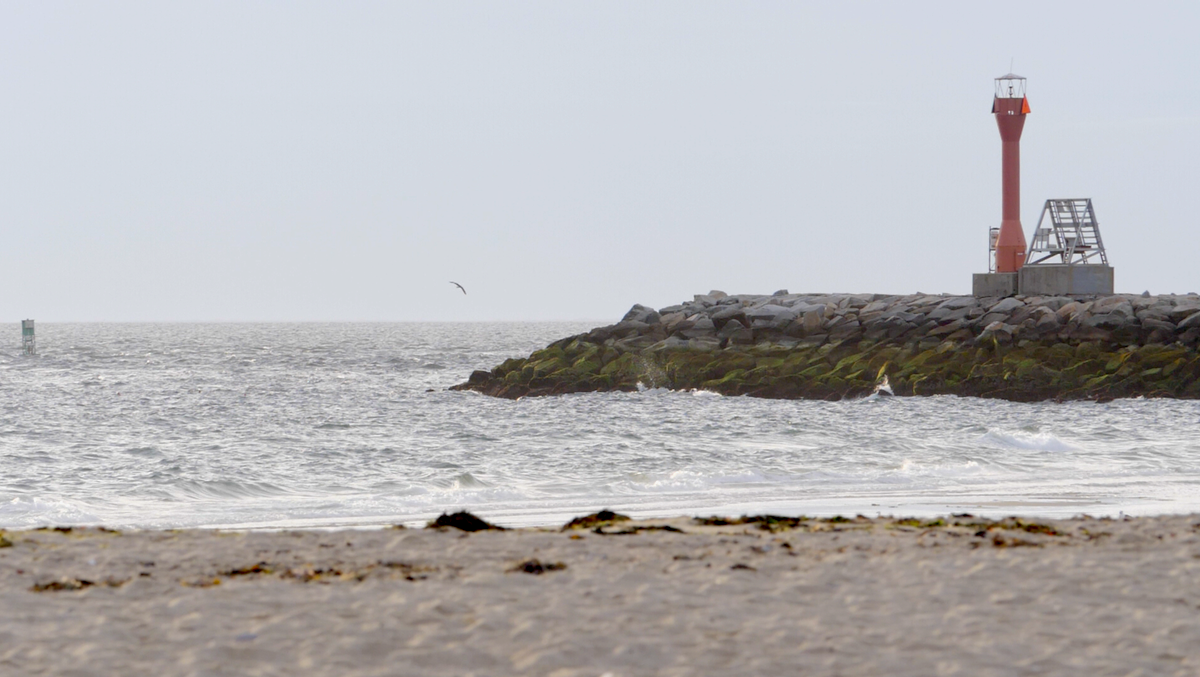
Cape Cod Bay in late May and early June is prime time for migratory stripers feeding on large bait. These are the fish the bait and switch was made for.
Tides matter less than finding fish that are actively feeding and willing to commit. What really drives the bite is the bait, the wind, and a little bit of luck.
Some days the fish are everywhere. Other days you're covering a lot of water before you find them. That's just the nature of fishing Cape Cod Bay for big migratory stripers in the spring.
Water and Boat Positioning
What kind of water are you looking for, and how do you position the boat to make it work best?
Boat positioning is one of the most important — and most underappreciated — parts of the whole equation when fly fishing for striped bass on Cape Cod. Diogo tries to get upwind of the fish so the boat drifts naturally toward them, keeping the fly line away from the hull and giving the angler a clean window to work with.
"I try to have the wind at my back so my angler fly fishing has the wind at his back, which keeps the line away from the boat and away from everybody." — Diogo
Once fish are on the plug, he'll work it at whatever angle sets up the best cast for his angler. If the drift is moving too fast, he'll throttle back an engine to slow things down and buy more time.
When fish are visible on the surface it's an intuitive process — you can see exactly what's happening and react accordingly. In deeper water it becomes more of a blind cast situation, where the fish finder does the talking and casting angle matters more than drift direction.
Change of Approach
Has your approach changed over the years — anything you do now that's totally different from when you started?
Diogo is straightforward about this one — the technique itself hasn't changed much, because it doesn't need to. "It's really not rocket science," he says. "It's more persistence. It's more like sticking to it." What he's gotten better at over the years is managing expectations before the boat ever leaves the dock.
He's upfront with every client about what they're signing up for.
They could stay inshore, catch plenty of schoolies, and have a comfortable day. Or they can run out to the middle of Cape Cod Bay, cover water, and hope to come across a big school of migratory striped bass. When that happens, it's something else entirely. But it takes patience, it takes work, and there are no guarantees. "It's a risk," he says simply. "I make sure my guys are fully aware of that."
The Most Important Things
What's the most important thing a Cape Cod angler needs to understand before their first bait-and-switch trip?
Finding fish is the starting point — reading birds, using your connections, covering ground until you locate something worth fishing. But once you're on them, Diogo keeps it simple.
"If your plug's not in the water, you're not going to raise any fish," he says. There will be heartbreaks along the way — a big striped bass teased to the boat, a blown cast, a loop in the line at the worst possible moment. That's the nature of it. But when everything clicks, there's nothing quite like it on Cape Cod.
"You see the fish crash the plug, the adrenaline gets going, the bait gets closer to the boat, and then you throw the cast and watch the fish eat the fly. It's really cool." — Diogo
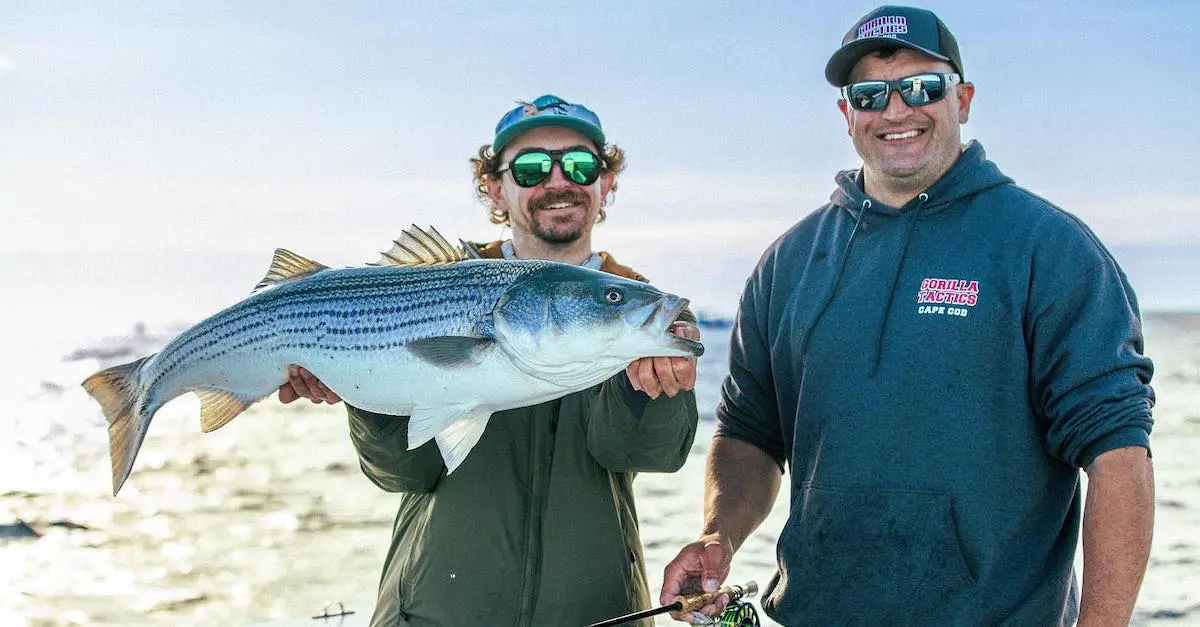
When it all comes together — the drift, the pull, the cast — there aren't many things in Cape Cod fishing that can match it.
In Conclusion...
Whether you're a seasoned striper angler looking to cross the bait and switch off your bucket list or a fly fisher who's never targeted fish this way before, Captain Diogo's insights offer a clear picture of what it takes to make it happen. The recurring theme throughout our conversation was hard to miss: the technique itself is simple, but the execution demands patience, persistence, and a willingness to put in the work.
The path forward is straightforward — get comfortable with your fly rod before you step on the boat, understand what the drift is doing, and keep the plug in the water. Don't get caught up chasing the perfect fly pattern or the ideal conditions. The fish don't care as much as you think they do, and the best day on the water is the one where you stayed focused and kept casting when it would have been easy to quit.
Most importantly, remember that the bait and switch is about more than just catching fish. It's about the whole experience — the visual chaos of striped bass crashing a plug, the split-second decision to pull the teaser, and watching a big bass eat a fly you threw. There will be blown casts, tangled lines, and fish that just won't cooperate. That's part of the deal. But when it all comes together, there aren't many things in Cape Cod fishing that can match it.
Tight Lines! 🎣
Cooper
Book a Trip with Gorilla Tactics Charters
Captain Diogo offers guided fly fishing charters targeting striped bass on Cape Cod, specializing in bait-and-switch techniques for anglers looking to catch bigger fish on the fly.
To book a trip:
💻 Website: gorillatacticssportfishing.com
📱 Instagram: @gorillatacticssportfishing